




Ask three European officials what "strategic autonomy" means and you will get three answers. A trade negotiator will talk about supply chains and export controls. A defence planner will talk about ammunition stockpiles and joint procurement. A finance ministry will quietly ask who pays. The phrase has become a container for all of it, which is exactly why it deserves unpacking.
Behind the jargon sits a plain question: when a crisis arrives — a pandemic, an invasion, a chip shortage, a supplier that suddenly refuses to sell — how much can Europe decide for itself, and how much does it wait for others to decide for it?
A phrase born in defence, now applied everywhere
The term entered the European Union's vocabulary through security and defence debates, and then migrated. Today it turns up in files on semiconductors, medicines, critical minerals, data, energy contracts, defence procurement, foreign takeovers and even export credit. That drift is not an accident. Each of those files involves the same underlying worry: a dependency that is fine in calm weather and dangerous in a storm.
Two ideas are often confused, and the confusion does the phrase no favours. Autonomy is not autarky. Nobody in Brussels seriously proposes that Europe make everything it consumes. The operative word is "strategic": the point is to be able to act, and to keep acting, in the handful of areas where a cut-off would do real damage. Everything else can stay traded, and should.
Autonomy, in the European reading, is about having options when pressure arrives — not about closing the door.
Four fronts where the debate actually bites
Listen to the speeches and it sounds like one debate. Look at the paperwork and it is four, each with its own logic, budget line and set of winners.
Supply chains
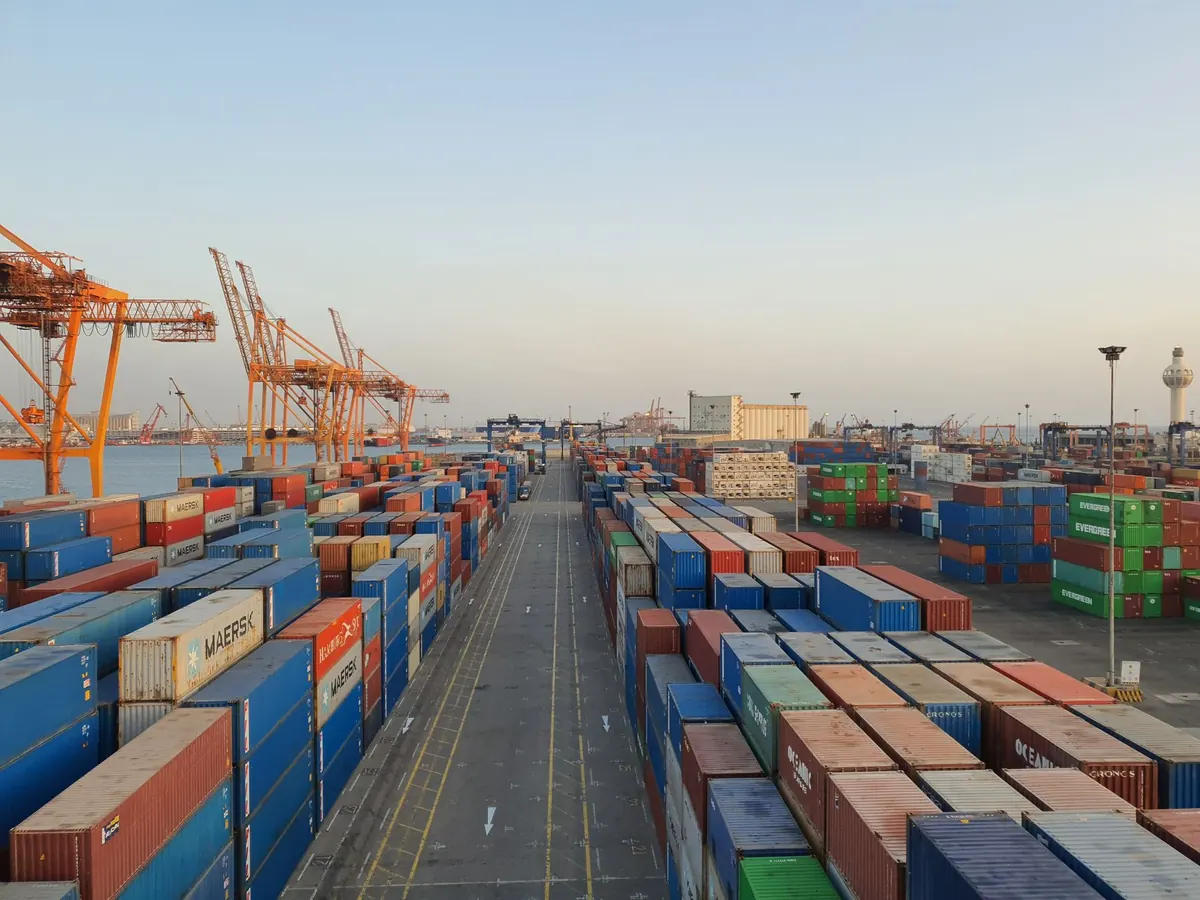
Here the questions are concrete. Where does the active ingredient come from? How many suppliers exist for a critical mineral, and in which countries? If a single port or a single strait closes, how long before production stops? The European answer has leaned on diversification, stockpiling for the most sensitive goods, and domestic capacity for a short list of materials judged critical. The hard part is not the ambition but the arithmetic: building a second source is expensive when the first one is cheap.
Technology
Semiconductors, cloud infrastructure, quantum, batteries, advanced manufacturing equipment. Europe has strong positions in some parts of this chain — machinery, research, industrial software in places — and thin ones in others. Policy has moved towards attracting fabrication plants, funding research, and setting common rules on export controls for dual-use technology, which are handled at European level rather than country by country.
Defence
The bluntest front of all. Years of underinvestment, fragmented national procurement and purchases from outside Europe left stockpiles low and production lines slow to scale. The response has been a mix of joint research money, collaborative procurement schemes and pressure on governments to buy together rather than one at a time. The obstacle is political: defence procurement is one of the last redoubts of national sovereignty, and governments guard it.
Foreign investment
Most member states now screen foreign takeovers in sensitive sectors, coordinated through a European framework built up over recent years. The logic is that a port, a chip designer or a grid operator is not an ordinary asset. The risk is that screening turns into quiet protectionism, or that capitals apply wildly different tests and companies cannot tell what is allowed.
Openness is not the opposite of autonomy
Brussels has settled on a phrase of its own — "open strategic autonomy" — precisely to head off the accusation that this is protectionism with a better vocabulary. The argument runs like this: a continent that lives by exporting cannot afford to retreat, and a continent that retreats will find itself poorer and less able to fund the very capabilities it wants.
The tension is real, though. A trade policy that screens investors, subsidises factories and retaliates against economic pressure uses the same instruments as a trade policy that shuts down. The difference lies in scope, transparency and whether the measures are time-limited. That is where most of the genuine argument now happens, and it is usually conducted in the footnotes of legislative texts rather than in headlines.
The trade-offs nobody enjoys pricing
Three costs recur. The first is money: redundancy is expensive, and duplicate capacity across member states is more expensive still. The second is fragmentation. If each government subsidises its own champion, the single market — Europe's real economic advantage — gets sand in its gears. The third is alliance politics. Autonomy is often discussed in the same breath as the transatlantic relationship, and different capitals read that relationship very differently.
Smaller, open economies tend to be the most nervous, and with reason. Their leverage comes from being embedded in trade and in common rules. A Europe that leans too hard on discretion and national vetoes makes them spectators.
What it changes for businesses and investors
For anyone running a company in Europe, this is no longer an abstract seminar. It shows up in paperwork, in deal timetables, in grant conditions. A short practical checklist:
- Map your single points of failure. Identify the two or three inputs — components, minerals, licences, logistics routes — where one supplier or one country carries most of your exposure. Start there, not with the whole bill of materials.
- Expect screening. If you are buying or selling a business in a sensitive sector, assume a national review and build months, not weeks, into the timetable. Prepare the story about ownership, control and data access early.
- Read subsidy conditions before celebrating. Public money for new capacity usually comes with strings: local production, technology transfer, reporting, or a commitment to stay.
- Watch export controls. Rules on dual-use goods can change faster than a commercial contract, and they bind the seller, not just the state.
- Check your contracts. Force majeure and supply-security clauses written for a calmer decade often do not cover the scenarios now being discussed.
How to follow the file without drowning in it
Ignore the speeches and follow the instruments. Pick three or four files — investment screening, critical materials, defence procurement, export controls — and track what actually moves: the legal text, the budget attached to it, and the votes in the European Parliament and among member states. Note where governments disagree, because that is where the substance is.
Then apply one test to every new proposal you read about. Does it buy Europe a real option in a genuine crisis, or does it simply protect an incumbent? A measure that passes the first test is worth the money and the friction. A measure that only passes the second will be paid for by everyone else, for a long time, and will make the next crisis harder rather than easier. That distinction is the whole argument — and it is the one worth having.
Photo: Bilal Ahmed / Pexels